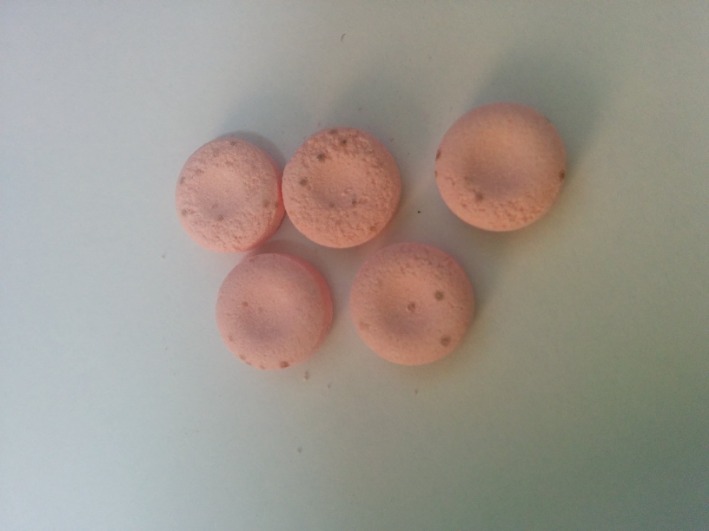
Not only have BZP and TFMPP tablets been found among bags of ecstasy (MDMA) tablets, the powders of all three drugs have been found mixed together in drugs being passed off as pure ecstasy. As of early 2005, other chemical substances related to BZP were being investigated for possible uses in the treatment of depression, psychosis, epilepsy, and severe pain. In addition, phenylpiperazine derivatives (substances similar to TFMPP) were being tested for their ability to kill certain types of cancerous tumors. Illegal piperazine tablets are sometimes packaged in vitamin containers.
Update On 1-benzylpiperazine (BZP) Party Pills

This study aimed to explore the potential for drug-drug interactions involving benzylpiperazine (BZP) and trifluoromethylphenylpiperazine (TFMPP). This was achieved by determining the effects of BZP and TFMPP on the metabolism of drugs commonly found in the clinical setting by using pooled human liver microsomes. Incubations consisted of a probe substrate (drug of interest), a potential inhibitor (BZP or TFMPP), a suitable enzyme co-factor (NADPH), and pooled human liver microsomes. Loss of substrate was determined by analysing pre- and post-incubation concentrations in the samples by using HPLC/UV analysis. Both TFMPP and BZP were found to inhibit the metabolism of dextromethorphan, caffeine, and ethinyloestradiol. These are reported substrates of CYP2D6, CYP1A2, and CYP3A4 respectively.
- BZP and TFMPP are substances known as intermediaries, meaning they are at a middle stage in chemical production.
- If you or someone else needs urgent help after taking drugs or drinking, call 999 for an ambulance.
- However, these drugs are beginning to be recognized by the medical community for their toxic effects.
- However, despite estimates of over 20 million doses sold in New Zealand alone and increasing seizures by the Drug Enforcement Administration in the USA, there are no published cases of dependence worldwide.
- In humans, piperazine citrate serves a similar function and is used to treat pinworm and roundworm infestations in adults and children.
About BZP/piperazines
If you or someone else needs urgent help after taking drugs or drinking, call 999 for an ambulance. Like drink-driving, driving when high is dangerous and illegal. If you’re caught driving under the influence, you may receive a heavy fine, driving ban, or prison sentence. (2003), ‘Central Serotonergic Effects of m-Chlorophenylpiperazine (mCPP) among Normal Control Adolescents’, Neuropsychopharmacology, Volume 28, pp. 133–139. (2008), ‘Investigation of the first deaths in the United Kingdom involving the detection and quantitation of the piperazines BZP and 3-TFMPP, Journal of Analytical Toxicology, Volume 32, No 2, pp. 172–177.
Toxic Effects
A neurotransmitter, acetycholine is involved in learning and memory. This led to the discovery of donepezil (Aricept), which helps ward off memory loss in patients with Alzheimer’s and other brain diseases. Most industrial sources supply a BZP preparation that is 97 percent pure, but manufacturers often do not list the ingredients used to prepare the other 3 percent of the compound. Many additives found in industrial chemicals may be toxic or even fatal if consumed. The “mystery ingredients” that are mixed in with it may add to that risk.
Medical Use
Any person convicted of possessing and/or selling a Schedule I drug can face a lengthy prison term and hundreds of thousands of dollars in fines. Warnings are given against combining prescription piperazines, used to treat parasitic infections, with certain psychiatric medications. Piperazines are especially dangerous when used by people with kidney disease, liver disease, or a history of epilepsy. If BZP comes in contact with the eyes or skin, it can cause severe inflammation and burns. When inhaled, it irritates the respiratory tract, leaving the user with a sore throat, coughing fits, and difficulty breathing. Prolonged inhalation can cause chemical burns to the breathing tubes and the buildup of fluid in the lungs.
Mixing drugs is always risky but some mixtures are more dangerous than others. How long the effects last and the drug stays in your system depends on how much you’ve taken, your size and what other drugs you may have also taken. The best known piperazines are BZP (benzylpiperazine), TFMPP, DBZP and mCPP. MCPP, was developed during the late 1970s and is used as an intermediate in the manufacture of several antidepressants, e.g. trazodone and nefazodone 5.
Thompson, I., Williams, G., Aldington, S., Williams, M., Caldwell, B., Dickson, S., Lucas, N., MacDowall, J., Weatherall, M., Frew A., Robinson, G. (2008), ‘The benzylpiperazine (BZP)/trifluoromethylphenylpiperazine (TFMPP) and alcohol safety study’, Medical Research Institute of New Zealand, Wellington. (2004), ‘Mass spectra of select benzyl- and phenyl-piperazine designer drugs’, Microgram Journal, Volume 2, Nos 1–4, pp. 22–26. There are no readily-available screening tests for mCPP or the other phenylpiperazine derivatives.
This particular method of ingestion irritates the lining of the nose, mouth, and breathing tubes. The chemical composition of substances sold as piperazines are changing all the time, which is why you can never be sure of what you’re getting and how it could affect you. Neither BZP nor any other piperazines are under international control, although several (BZP, TFMPP, mCPP, MDBP) were pre-reviewed by the WHO Expert Committee on Drug Dependence in 2012. Several countries have introduced national control measures over piperazines. Peters, F.T., Schaefer, S., Staack, R.F., Kraemer, T., Maurer, H.H.

While the pharmacokinetic data have recently been published, little research has been conducted on the subjective effects of these piperazines on humans. This paper outlines the subjective effects observed following oral doses of BZP (200 mg) and TFMPP (60 mg) alone, or in combination (100/30 mg) compared to placebo. BZP showed significant dexamphetamine-like stimulant effects, inducing euphoria, sociability, and drug liking, whereas TFMPP induced fewer stimulant-like effects and increased anxiety, via its serotonergic effects. The combination of BZP and TFMPP induced similar subjective effects, along with well-characterized dexamphetamine- and MDMA-like effects. These subjective data allow for obvious comparisons to be made between party pill drugs and other commonly known stimulants.
Subjective Effects
A clinical trial by ClubStargate for a pill named Ease was suspended because it contained methylone, which was claimed by the Ministry of Health to fall under New Zealand controlled drug analogue laws (although this was never proven in court). And Sweetsur, P. (2007), ‘The prevalence of use, dependency and harms of legal ‘party pills’ containing benzylpiperazine (BZP) and trifluorophenylmethylpiperazine (TFMPP) in New Zealand’, Journal of Substance Use, Volume 12, No 3, pp. 213–224. Like amphetamines, piperazines increase the heart rate, blood pressure, and body temperature, which can be dangerous or even fatal. At high doses, piperazines may produce hallucinations, convulsions, and slowed breathing that can result in death. The physical effects of piperazine use include nausea, vomiting, redness of the skin, stomach pains, thirst, dry mouth, frequent urination, bladder infection or irritation, severe headaches, and “hangover” feelings lasting up to two days. BZP and TFMPP also affect brain centers that control movement.
- Over the last decade, New Zealand has led the world in the legal sale and uncontrolled use of the recreational drug benzylpiperazine (BZP), the active ingredient of ‘party pills’.
- These include among others 1-(3-chlorophenyl) piperazine (mCPP), 1-(3-trifluoromethylphenyl) piperazines (TFMPP), 1-benzyl-4-methylpiperazine (MBZP), 1-(4-fluorophenyl) piperazines (pFPP) and 1-cyclohexyl-4-(1,2-diphenylethyl) piperazine (MT-45).
- Like drink-driving, driving when high is dangerous and illegal.
- Conclusion Findings suggest that young people in this study were not suffering excessive or dangerous adverse effects.
- Following a risk assessment in 2007, a Council Decision of 2008 introduced controls on BZP in the European Union.
- TFMPP acts by stimulating nerve receptors sensitive to serotonin, another neurotransmitter.
What Is BZP?
The survey consisted of a random national household sample of 2,010 people aged years old collected using the Centre for Social and Health Outcomes Research and Evaluation (SHORE) and Whariki’s in-house computer assisted telephone interviewing (CATI) system. The need for emergency room treatment rose considerably by 2004 among users of BZP and TFMPP. In many cases, users are unaware of the dosage of the tablets they take, which increases the risk of overdose and even death.
Street names have included A2, Legal X and Pep X. In New Zealand, piperazine derivatives were commonly known as ‘party pills’. Like ecstasy, other names may reflect the particular logo on tablets. BZP and TFMPP are amphetamine-like recreational drugs and the major active components of ‘party pills’. The pharmacodynamic effects of these neurally active drugs are thought to be dependent on their activity at DA and 5-HT receptors and several studies report drug-drug interactions at a pharmacodynamic level. Their metabolism involves the hepatic P450 enzymes CYP2D6, CYP1A2 and CYP3A4 resulting in inhibited metabolism of other drugs and medicines, as well as compromised metabolism in poor metabolisers for CYP2D6. Basic pharmacokinetic properties are described for both BZP and TFMPP when taken alone and in combination.
On rare occasions BZP has been injected or snorted (insufflated). BZP has been available from retail chemical suppliers and there have been no reports of illicit synthesis. It can be manufactured by reacting piperazine monohydrochloride with benzyl chloride.
Since 2012, TFMPP has been listed as a Schedule III controlled substance in Canada,18 making possession of TFMPP a federal offence. It has also been added to Part J of the Food and Drug Regulations thereby prohibiting the production, export or import of the substance. Victoria, the last state in which it was legal, changed its classification on 1 September 2006,42 when BZP and piperazine analogs become illegal in the federal schedules, which are enacted by all Australian states and territories. (2004), ‘A2 (N-benzylpiperazine) a new drug of abuse in Sweden’, Journal of Analytical Toxicology, Volume 28, No 1, pp. 67–70.
(2003), ‘Screening for and validated quantification of amphetamines and of amphetamine- and piperazine-derived designer drugs in human blood plasma by gas chromatography/mass spectrometry’, Journal of Mass Spectrometry, Volume 38, No 6, pp. 659–76. Animal studies have demonstrated that BZP stimulates the release and inhibits the reuptake of dopamine, serotonin and noradrenaline. BZP appears to be metabolised by cytochrome P450 (possibly involving the CYP2D6 iso-enzyme) and catechol-O-methyl-transferase (COMT). These systems are prone to genetic polymorphisms, so potential inter-individual differences may occur. In animal and human studies, the main metabolites are 4-hydroxy-BZP, 3-hydroxy-BZP, 4-hydroxy-3-methoxy-BZP, piperazine, benzylamine and N-benzylethylenediamine. The hydroxy-metabolites are also excreted as glucuronic and/or sulphuric acid conjugates in urine.
Piperazines
Since the early 1950s, piperazines have been used widely by veterinarians as an anthelmintic drug. In humans, piperazine citrate serves a similar function and is used to treat pinworm and roundworm infestations in adults and children. The drug acts by paralyzing the muscles of mature worms and dislodging them from the walls of the intestines. TFMPP is controlled in Texas under Penalty Group 2, as a hallucinogenic substance.