Our mission is to simplify navigation in the complex and evolving world of the darknet. Here, you’ll find links to various resources, including educational archives, private forums, anonymous services, and more. Lin allegedly used those funds to pay employees and for computer servers – as well as collecting millions of dollars in profit. The platform provided a user experience that matched those offered by modern e-commerce sites, complete with vetting and registration of sellers, advertising, customer service faciities and a slick UX. A federal district court judge will determine Lin’s sentence after reviewing the U.S.
Comwave Networks Faces Alleged Cyberattack From Medusa Ransomware Group
This open-source protocol mitigates DDoS attacks by acting as a smart proxy between the backend service and the end user. Based on this publicly available information, authorities concluded that Lin possessed the requisite technical knowledge and experience to operate Incognito Market. Had this been a one-off event, you might just call it a coincidence, but he repeated this cash-out severally to draw suspicion. In one instance, he even publicly posted on a forum about how he sent BTC to the swapping service but never received the XMR equivalent.
It’s the same heavy statute used against infamous figures like the founder of Silk Road, Ross Ulbricht, signifying that prosecutors viewed Incognito Market as the equivalent of a major drug cartel, just in digital form. Knowing that Lin resided overseas (Taiwan, and possibly on assignment in St. Lucia), law enforcement had to be strategic about how to apprehend him. It appears agents were monitoring his movements (possibly through alerts on his passport or flight bookings).
WiFi Sniffer Leads To Russian Spying Charges For Dutch Teens
At the same time the FBI says Lin was laying the groundwork for this double-cross, he also appears to have briefly tried engineering an entirely different scheme. Incognito Market, which was shut down in March, was an online dark web marketplace that allowed users to buy and sell illegal drugs anonymously, according to the Justice Department. Rui-Siang Lin, also known as “Pharoah,” was arrested at John F. Kennedy Airport in New York on Saturday and was to appear in court on Monday, the Justice Department said, calling it “one of the largest illegal narcotics marketplaces on the internet.” The law enforcement officers found dozens of databases on these servers containing information on at least 1,312 vendor accounts, 255,519 customer accounts, and 224,791 transactions linked to market orders. One was used to host Incognito’s DDoS prevention system, one hosted the back-end marketplace data, including all completed narcotics transactions, while the third acted as the market’s bank and was used to process all cryptocurrency transactions.

Ross Ulbricht, the creator and operator of the now-shuttered Silk Road darknet drug marketplace, was found guilty of the same crime and sentenced to life in prison. The narcotics conspiracy charge carries a mandatory minimum sentence of 10 years and a maximum potential sentence of life in prison. If convicted, Lin faces a mandatory minimum penalty of life in prison for engaging in a continuing criminal enterprise.

Bitcoin Queen Convicted In UK’s Largest-Ever Crypto Seizure Tied To China Fraud

Incognito Market was designed to foster seamless narcotics transactions across the internet and across the world and incorporated many features of legitimate e-commerce sites, such as branding, advertising and customer service. Upon visiting the site, users were met by a splash page and graphic interface, which is pictured below. It’s not clear whether Lin obtained his Chainalysis certification to bolster a new career training law enforcement in blockchain analysis or, if US prosecutors are to be believed, to advance his previous alleged career as a dark-web criminal. But it raises the troubling possibility that a former dark-web kingpin—one who was still extorting his own users—was perhaps playing both sides of the crypto tracing game, says Elliptic’s Tom Robinson.
Security Incognito Marketplace
Incognito charged vendors a 5% commission on every sale, a business model that generated millions of dollars in revenue for the platform. New vendors paid an admission fee to join, ensuring a revenue stream and a barrier against law enforcement decoys or low-effort scammers. In return, Incognito provided an infrastructure for secure (albeit illegal) transactions and acted as an escrow intermediary between buyer and seller. This approach mirrored the playbook of earlier darknet markets and contributed to Incognito’s rapid growth.
The Fall Of A Dark Web Kingpin: Inside The Rise And Collapse Of Incognito Market
With the investigation already in full swing, the exit scam provided law enforcement with the final piece of the puzzle. By 2022, the FBI and Homeland Security had begun to take a serious interest in Incognito Market. The market’s sophisticated security measures, coupled with its global reach, made it one of the most challenging targets they had ever faced. But the agents assigned to the case were determined, and they began to devise a plan to bring down the empire that Lin had built. In addition to switching to Monero, Incognito Market employed a decentralized internal banking system. When users deposited Bitcoin into the market, it was immediately converted into Monero, leveraging the privacy features of Monero to ensure that even if the initial Bitcoin transaction could be traced, the trail would go cold once the funds were inside the market’s banking system.
- In early 2024, vendors began reporting issues with BTC withdrawals—an ominous sign of what would become a classic darknet “exit scam.” In March, a message appeared on Incognito threatening to leak vendor identities and private messages to law enforcement unless paid in cryptocurrency.
- Another incredible detail of the case is the way in which the administrator(s) of Incognito Market (presumably including Lin) “exit scammed” vendors on the site.
- But the agents assigned to the case were determined, and they began to devise a plan to bring down the empire that Lin had built.
- Details of the bust were announced in a DOJ press release published on May 20, 2024, which revealed that Lin was apprehended on May 18 at John F. Kennedy Airport.
- Illegal drug trafficking and sales have always been a major focus among the FBI, Department of Homeland Security and other agencies.
Incognito Darknet
This revelation helped the Feds identify the exact transaction and his wallet details. Illegal drug trafficking and sales have always been a major focus among the FBI, Department of Homeland Security and other agencies. So it’s no surprise the illicit activities worth over $100 million conducted within the Incognito Market ecosystem were already garnering attention. CoinTelegraph notes that Incognito Market administrators initially lied about the situation, and blamed users’ difficulties in withdrawing funds on recent changes to Incognito’s withdrawal systems.
- For instance, an undercover law enforcement agent bought tablets on Incognito Market in November 2023 that were supposed to be oxycodone, but were actually fentanyl.
- The EDTF is the premier money laundering task force in the nation and is comprised of more than 200 law enforcement personnel representing approximately thirty-five (35) federal, state, and local law enforcement and regulatory agencies.
- Investigators could use that to build probable cause that Lin and Pharaoh were one and the same.
- To facilitate these financial transactions, Incognito Market had its own “bank,” which allowed its users to deposit cryptocurrency on the site into their own accounts.
- By 2023, it had become one of the most popular darknet marketplaces, attracting thousands of users from around the world.
Lin was arrested at John F. Kennedy International Airport on May 18 and was presented in Manhattan federal court before U.S. A federal district court judge will determine any sentence after considering the U.S. As alleged in the complaint and the indictment, Incognito Market was an online narcotics bazaar that existed on the dark web. Since that time, and through its closing in March, Incognito Market sold more than $100 million of narcotics — including hundreds of kilograms of cocaine and methamphetamines. The message included a list of the “top” vendors who had paid the ransom to protect their customers and themselves.
Law enforcers’ investigation into Incognito Market operations and Lin’s subsequent arrest involved a combination of sophisticated techniques and international cooperation. In May 2024, the US Department of Justice (DOJ) announced the arrest of alleged Incognito Market mastermind Rui-Siang Lin. The 23-year-old darknet kingpin, popularly known as Pharoah or Faro, had long been on the FBI’s radar and eventually met his comeuppance at JFK airport. Incognito Market says it plans to publish the entire dump of 557,000 orders and 862,000 cryptocurrency transaction IDs at the end of May. Attorney for the Southern District of New York, the FBI’s New York and Cincinnati field offices, the Drug Enforcement Administration, the U.S.
Incognito Links
Another incredible detail of the case is the way in which the administrator(s) of Incognito Market (presumably including Lin) “exit scammed” vendors on the site. Specifically, in February 2024 Incognito users reported withdrawal issues with their BTC deposits – meaning that Incognito would not allow vendors to withdraw funds. According to TRM, deposits to Incognito dramatically decreased but still continued during this time period. U.S. agencies like the FBI, DEA, IRS-CI, and HSI worked alongside Europol, the U.K.’s NCA, and law enforcement from over a dozen countries. At the same time, financial enforcers like OFAC sanctioned individuals running darknet markets—including Iranian national Behrouz Parsarad of Nemesis—demonstrating how financial tools are being brought into alignment with traditional law enforcement.
As soon as Lin transited through a U.S. jurisdiction (JFK Airport in New York), authorities pounced. On May 18, 2024, Rui-Siang Lin was arrested by FBI and HSI agents at JFK, effectively ambushing him during a layover before he could continue elsewhere. This tactic – arresting a target during international transit – is often used when a suspect is based in a country with no easy extradition. Taiwan does not have a formal extradition treaty with the U.S., so luring or waiting for Lin to enter U.S. soil was the surest way to get custody of him. The arrest operation at the airport was coordinated and swift, giving Lin little time to react or attempt any digital sabotage (like wiping devices).
In May 2024, a 23-year-old Taiwanese IT specialist named Rui-Siang Lin stepped off a plane at New York’s JFK airport and was promptly arrested by federal agents. Until that moment, Lin led a double life that astonished both law enforcement and the darknet community. By day, he worked as a diplomatic tech expert training police in cybercrime; by night, he was “Pharaoh,” the secretive mastermind of Incognito Market – one of the world’s largest dark web drug marketplaces. Incognito Market’s rise and dramatic collapse, along with Lin’s arrest, sent shockwaves through the darknet economy. This deep dive examines the marketplace’s history, technical underpinnings, the man behind the alias, and how investigators brought down a darknet kingpin.

ICE, Europol, Law Enforcement Partners, Dismantle Major Illicit Drug Networks In Global Darknet Crackdown
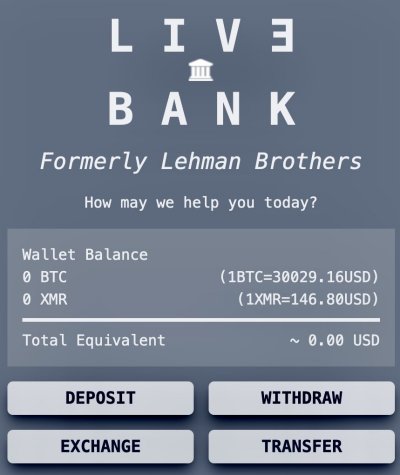
Unlike Bitcoin, which has a transparent public ledger, Monero’s transactions are completely private. This made it the perfect currency for darknet transactions, as it allowed users to send and receive funds without leaving a trace. While Silk Road and Hydra had laid the groundwork for darknet markets, they were not without their flaws.